






Washington Adult Congenital Heart Program (WACH)
Established in 2001, the Washington Adult Congenital Heart Program (WACH) is the oldest and largest adult congenital heart program in the Washington, D.C., region. The WACH program works collaboratively with the Heart and Lung Center's pediatric cardiologists to provide seamless care to the ever-growing population of adults with congenital heart disease (CHD).
WACH meets the unique needs of adults with CHD by providing necessary resources and highly sophisticated care in a central location. We work with colleagues at MedStar Washington Hospital Center and use resources from both institutions to provide the most thorough evaluations and treatment for even the most complex congenital heart patients.
Our Providers
Our adult congenital cardiology specialists provide personalized care for you or your adult child’s physical, mental and emotional health needs.
Contact Information
For appointments and program information, please call 202-476-2728.

Children's National Heart and Lung Center
The Washington Adult Congenital Heart Program (WACH) program is part of the Heart and Lung Center, a leading center of comprehensive cardiac care in the United States.

Comprehensive Care
While more than 90 percent of children who undergo surgery to correct congenital heart defects live to adulthood, nearly half of these patients do not receive the recommended sub-specialty cardiac care, which is critical for their health.
Studies and clinical information show that adults with congenital heart disease face an increased risk of cardiac conditions years after corrective surgery. National guidelines from a variety of professional organizations all recommend at least one evaluation in a specialized center for adults with congenital heart disease.
The team at the Heart and Lung Center follows the most up‑to‑date AHA/ACC guidelines to ensure you receive the highest level of care. Our providers follow patients from birth through adulthood to ensure care is provided from board-certified pediatric and adult cardiologists, cardiothoracic surgeons, intensive-care experts and a skilled support team, all of whom are specially trained in caring for congenital heart disease patients.
Expert Care Team
Anitha John, MD, PhD, has served as the program’s medical director since 2011, after having completed a specialized fellowship at the Mayo Clinic dedicated to the management of congenital heart defects in adult patients. The program includes four additional board-certified adult congenital cardiologists (Seiji Ito, MD, Tacy Downing, MD, Michael Bykhovsky, MD and Wayne Franklin, MD) as well as two advanced practice providers (Rachel Steury, NP and Rebecca Freeman, PA).
About the WACH Program
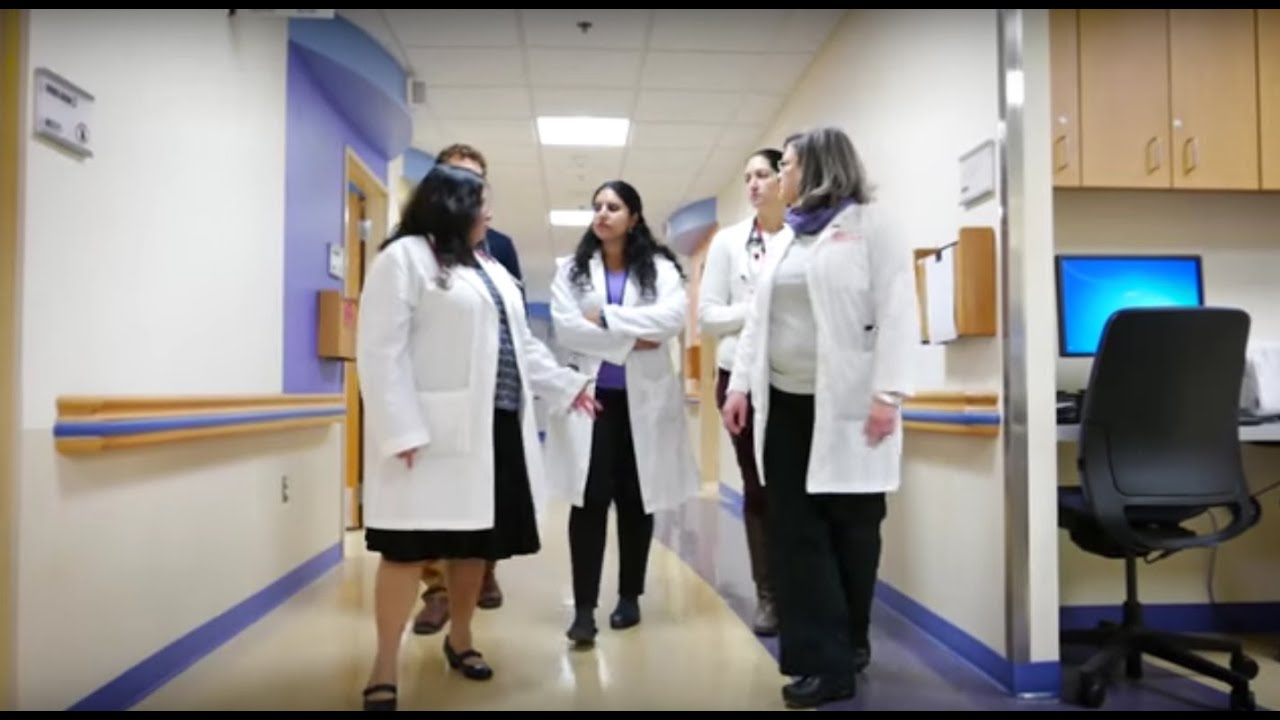
Patients who start their care at the Children’s National keep advancing in their health and well‑being throughout adulthood. Listen to what Anitha John, MD, PhD, medical director of the WACH Program, has to say about how we provide specialized care for adults living with congenital heart conditions.

A Partnership for Patients
Developed with MedStar Washington Hospital Center, WACH delivers lifelong care for adults with congenital heart disease. This long-standing partnership—one of only 59 Adult Congenital Heart Association (ACHA)‑accredited programs nationwide—connects Children’s National and MedStar, located on adjoining campuses.

Outcomes Data
The WACH program meets the unique needs of adult patients with congenital heart disease (CHD) by providing all the necessary resources and highly sophisticated care in a central location. The program is the longest-standing and largest program dedicated to the growing population of adults with CHD in the Washington, D.C., region.

Locations
This is a carousel. Use Next and Previous buttons to navigate.

Main Hospital
- Specialty Care
- Emergency Care







Family Resources
New Patient Forms
If you are a new patient, please fill out the Washington Adult Congenital Heart New Patient Questionnaire before your visit.
8 Tips to Help Children with CHD Prepare for Healthy Futures
Congenital heart defects (CHD) remain the most common birth defect. Thanks to major advances in medicine and surgery, children with CHD have a more than 90 percent survival rate.